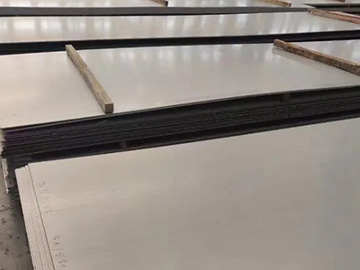
If you are looking for the 17-4 PH stainless steel plate price per ton, the first thing to know is that 17-4 PH is a premium precipitation-hardening stainless steel, so its price is normally higher than conventional grades such as 304 and 316.
In August 2026, indicative market quotations for 17-4 PH / UNS S17400 / AISI 630 stainless steel plate are generally around USD 3,500–9,200 per ton, depending on thickness, condition, surface finish, certification, quantity, processing requirements, and delivery terms. Recent supplier-market references place standard 17-4 PH sheet and plate around USD 3,500–7,200/ton, while heat-treated, customized, or smaller-volume material can reach approximately USD 9,000/ton or more.
For buyers comparing quotations, the lowest price is not always the lowest total purchasing cost. The 17-4 PH condition, ASTM specification, heat treatment, dimensional tolerance, MTC certification, and quantity should be confirmed before comparing offers.
Price per Ton of 17-4 PH Stainless Steel Plate (August 2026)
The table below provides reference market prices for 17-4 PH stainless steel plates for August 2026. These figures serve as a reference range rather than fixed exchange-listed prices; as 17-4 PH is a specialty stainless steel, GNEE determines pricing based on specific specifications and order details.
| 17-4 PH Plate Type |
Typical Thickness |
Indicative Price/ton |
| Solution Annealed, Condition A |
3–10 mm |
USD 4,500–7,500/ton |
| Solution Annealed, Condition A |
12–50 mm |
USD 4,300–6,800/ton |
| Aged / H900 / H1150 |
3–20 mm |
USD 5,400–9,200/ton |
| Cold Rolled / Thin Sheet |
0.5–3 mm |
USD 6,300–9,200/ton |
| Hot Rolled Plate |
3–20 mm |
USD 5,000–7,800/ton |
| Heavy Plate |
20–100 mm |
USD 4,300–6,800/ton |
| Cut-to-Size / Machined Plate |
Customized |
Quote Required |
Recommended purchasing benchmark: For a normal commercial quantity of ASTM A693 17-4 PH plate, buyers can initially use approximately USD 4,500–7,500 per ton as a working budget. Heat-treated H900/H1150 material, small quantities, tight tolerances, special testing, or cut-to-size orders should be budgeted higher.
What Is 17-4 PH Stainless Steel Plate?
17-4 PH stainless steel is a martensitic precipitation-hardening stainless steel commonly identified as UNS S17400, AISI 630, Type 630, or 1.4542. It combines high strength, hardness, and useful corrosion resistance, making it suitable for applications where conventional austenitic stainless steels may not provide sufficient mechanical strength.
Market Analysis of 17-4 PH Stainless Steel (August 2026)
Market demand stems primarily from industries requiring both high strength and corrosion resistance—specifically aerospace, oil and gas, chemicals, energy equipment, and industrial machinery. ASTM (American Society for Testing and Materials) defines precipitation-hardening stainless steel as a material suitable for applications demanding both corrosion resistance and high strength, with operating temperatures reaching up to approximately 600°F (315°C).
5 Factors Determining 17-4 PH Stainless Steel Plate Price Per Ton
"17-4 PH price per ton" sounds like a simple figure, yet two suppliers might offer vastly different quotes for seemingly identical steel plates.
-
Heat Treatment & Delivery Condition
17-4 PH stainless steel plates can be supplied in Condition A (Solution Annealed) or various age-hardened conditions, such as H900, H925, H1025, H1075, and H1150. High-strength precipitation-hardening thermal treatments require additional processing steps, driving up the overall cost per ton.
-
Plate Thickness & Tolerances
The price per ton often varies between thin precision sheets and heavy plates. Small batches of 1–3 mm gauge sheets usually carry a higher price per ton due to strict cold-rolling, flatness, surface finish, and tight dimensional tolerance requirements. Conversely, heavy plates ordered in large volumes may benefit from lower per-ton production costs.
-
Order Quantity & Tiered Pricing
A 20-ton production batch and a 500 kg trial order will yield significantly different price points. When sourcing, request quotes for tiered quantities—such as 500 kg, 1 ton, 5 tons, 10 tons, and Full Container Load (FCL) volumes—to properly evaluate volume discounts offered by the mill or distributor.
-
Testing, Inspection & Certification
Critical applications in aerospace, oil & gas, and defense require testing that goes far beyond standard Mill Test Certificates (MTC). Quotes may include additional costs for: EN 10204 3.1 MTC, EN 10204 3.2 inspection certificate, chemical composition analysis, tensile testing, yield strength verification, hardness testing, ultrasonic testing (UT), Positive Material Identification (PMI), and third-party inspection (TPI).
-
Incoterms & Destination Freight Costs
Ex-Works (EXW) quotes differ drastically from fully delivered, duty-paid prices. When comparing suppliers, verify which Incoterm governs the quote: EXW → FOB → CFR → CIF → DDP. Ocean freight, transit insurance, customs clearance, customs duties, and local port charges substantially impact your final landed cost.
Why is 17-4 PH stainless steel more expensive than 304 stainless steel?
17-4 PH is a precipitation-hardening stainless steel; the numbers in its name indicate a composition of approximately 17% chromium and 4% nickel, alongside 3%–5% copper (Cu) and small amounts of niobium (Nb/Cb). The addition of copper and niobium enables precipitation hardening, which significantly drives up raw material procurement costs.
304 is a general-purpose stainless steel with the highest global production volume and a highly mature manufacturing process. In contrast, 17-4 PH is a high-performance specialty steel with relatively lower market demand, naturally resulting in a higher unit price.
How to Get an Accurate 17-4 PH Stainless Steel Plate Quote
Grade: 17-4 PH / UNS S17400 / AISI 630
Standard: ASTM A693 / ASME SA693
Condition: A / H900 / H1025 / H1150
Thickness: for example 10 mm
Width: for example 1,500 mm
Length: for example 3,000 mm
Quantity: for example 5 tons
Surface: 2B / No.1 / polished / customized
Testing: MTC / EN 10204 3.1 / third-party inspection
Delivery: FOB / CIF / CFR / DDP
Destination: required port or country
Why Buy 17-4 PH Stainless Steel Plate from GNEE?
GNEE can supply 17-4 PH / UNS S17400 / AISI 630 stainless steel plate for industrial and engineering applications with customized dimensions and documentation according to project requirements.
Depending on the order, GNEE can provide:
ASTM A693 / ASME SA693 compliant material
17-4 PH / UNS S17400 / AISI 630
Condition A and precipitation-hardened conditions
Customized plate thickness and dimensions
Cutting and processing services
Chemical composition and mechanical testing
EN 10204 3.1 MTC
Export packaging suitable for sea transportation
FOB, CFR and CIF quotations
Small-batch and bulk purchasing options
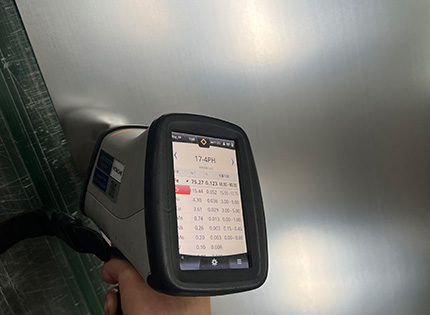
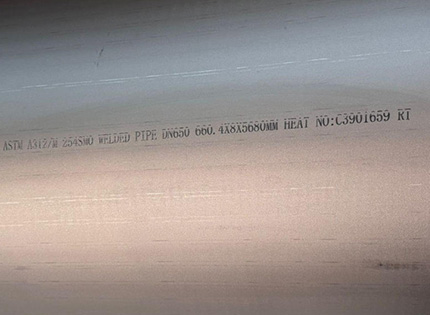
For international buyers, every batch of goods can be supplied with the corresponding quality documentation, helping customers verify heat number, chemical composition, mechanical properties and material traceability before use.
.png)
.png)
FAQ
Is 17-4 PH more expensive than 316 stainless steel?
Generally, yes. 17-4 PH is a specialty precipitation-hardening alloy and requires additional processing to develop its mechanical properties. Its higher strength and specialized production normally result in a higher price than commodity 316 plate.
What is the cheapest 17-4 PH condition?
For many applications, Condition A solution-annealed material can be less expensive than material that has already been aged to H900 or another precipitation-hardening condition. However, the correct condition should be selected according to the required mechanical properties.
What standard covers 17-4 PH stainless steel plate?
ASTM A693 is a key specification covering precipitation-hardening stainless steel plate, sheet and strip, including Type 630 / UNS S17400 material. The current ASTM listing identifies ASTM A693-24 as an active edition.
Can I buy 17-4 PH plate by the ton?
Yes. 17-4 PH plates are available for both project quantities and bulk orders. For large orders, requesting a price per ton based on the exact thickness, condition and delivery terms is preferable to using a generic online price.