What is 1.4301 austenitic stainless steel?
Austenitic stainless steel 1.4301, also known as AISI 304, BS 304S31, 304 stainless steel, or X5CrNi18-10, is widely used and can be processed in various ways, such as cold forming and cold heading. It is also well-suited for forging, rolling, and welding. However, it should be noted that this stainless steel is not resistant to intergranular corrosion during welding. As an austenitic chromium-nickel steel, AISI 304 (1.4301 / BS 304S31) is non-magnetic, with very weak magnetism. It can be polished (up to a bright finish), ground, and brushed.
What is AISI Type 304?
AISI 304 is a type of austenitic stainless steel, known as the most common grade, and is valued for its excellent corrosion resistance, good strength, and ease of fabrication. It is widely used in applications like kitchen equipment, food and beverage processing, and architectural accents due to its resistance to rust and acids. Other common names include SS 304, UNS S30400, and 1.4301.
What is the difference between 1.4301 and AISI 304?
|
|
|
|
|
|---|---|---|---|
|
|
|
|
|
|
|
|
|
|
|
|
|
|
|
|
|
|
|
|
|
|
|
|
|
|
|
|
|
|
|
|
|
|
|
|
|
|
|
|
|
|
|
|
|
|---|---|---|---|
|
|
|
|
|
|
|
|
|
|
|
|
|
|
|
|
|
|
|
|
|
|
|
|
|
|
|
|
|
|
Equivalent Grades: 1.4301 = AISI 304 (same base chemistry & performance).
Low‑Carbon Variant: 1.4307 (EN) = AISI 304L (C ≤ 0.03 %), better intergranular corrosion resistance after welding or heating.
Applications: Widely used in food processing, chemical equipment, architectural cladding, medical devices, and general corrosion‑resistant applications.
Selection Tip: Specify EN or ASTM standard according to regional norms, especially for thickness tolerances and surface finish requirements.
Is AISI 304 Magnetic or not?
AISI 304 is essentially non-mag- netic, but it becomes slightly magnetic when cold worked. Low carbon content means less carbide precipitation in the heat-affected zone during welding and a lower susceptibility to intergranular corrosion.
Does AISI 304 rust?
It's important to consider that, although 304 stainless steel can corrode, it will not rust in normal atmospheric conditions. The corrosion of stainless steel only occurs under more aggressive environments or in situations where the composition of the steel contains impurities.
What is the life expectancy of 304 stainless steel?
| Stainless Steel Grade | Corrosion Resistance | Estimated Lifespan |
|---|---|---|
| 304 Stainless Steel | High | 50+ years |
| 316 Stainless Steel | Very High | 70+ years |
| 430 Stainless Steel | Moderate | 30+ years |
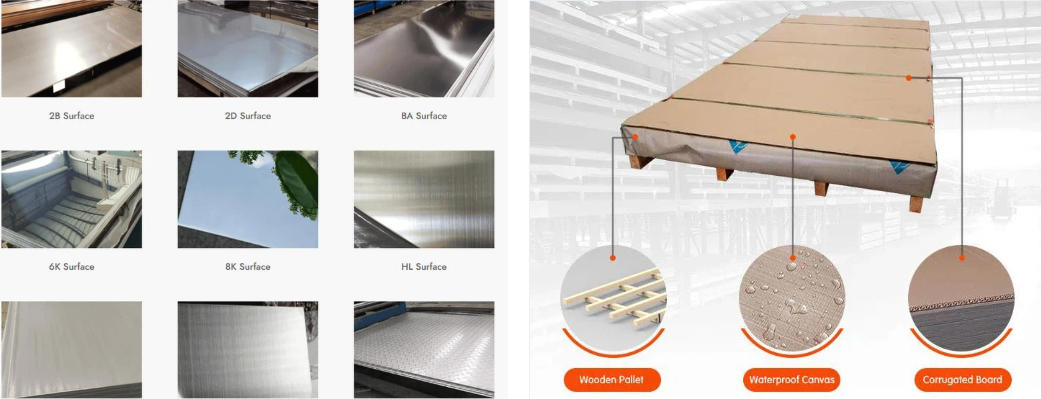
Gnee stocks 304 stainless steel plates with wide size choices. Our 304 ss sheets offer exceptional corrosion resistance, excellent formability, and high strength. We also provide a variety of 304 ss plate options, including perforated ss plate, chequered ss plate, brushed ss plate, etc. Gnee support fast delivery, surface finishing, and product cutting services.
With over 18+ years of industry experience, Gnee is dedicated to delivering tailored, precision-cut steel solutions. Contact us now for detailed information and competitive pricing!