what is en 1.4401 stainless steel?
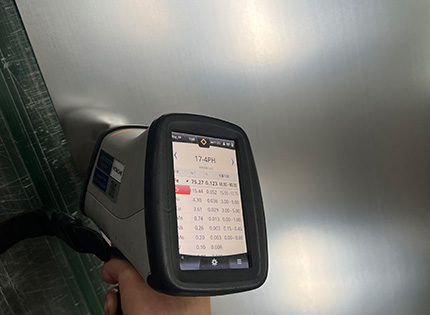
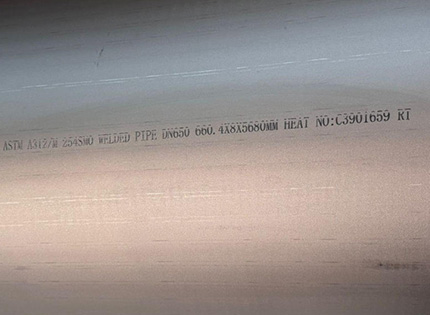
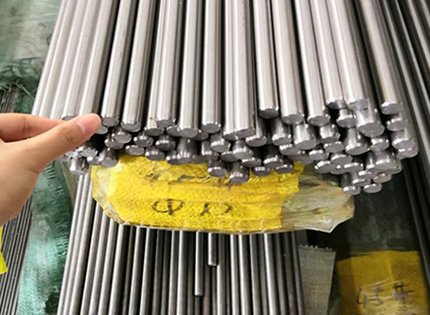
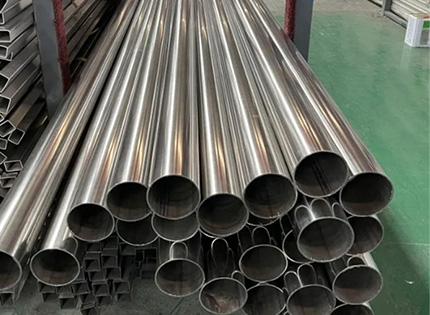
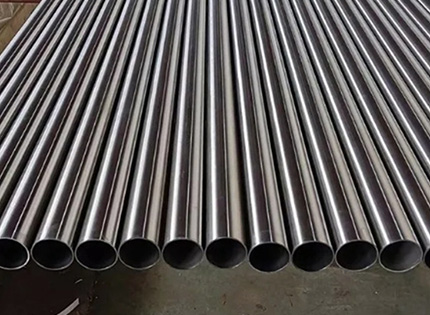
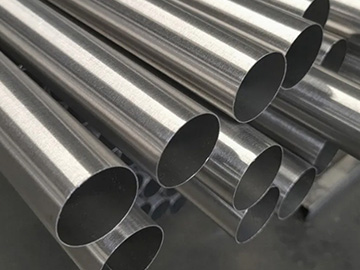
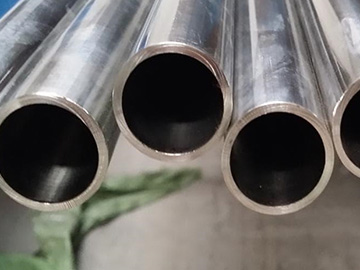
EN 1.4401 is an austenitic stainless steel grade, commonly known as AISI 316, which is prized for its high corrosion resistance, particularly to chlorides, due to its composition of chromium, nickel, and molybdenum. This makes it ideal for applications in marine, chemical, petrochemical, and food processing industries, including boat fittings, pipes, valves, and food-grade equipment. It is also used in medical implants and coastal architecture.
Are EN 1.4401 and 316 stainless steel the same?
Yes, EN 1.4401 is the European standard designation for 316 grade stainless steel. These designations are used interchangeably in different regions and standards organizations, referring to the same material that exhibits excellent corrosion resistance due to the addition of molybdenum.
What is the difference between 1.4401 and 1.4404 (316L)?
The main difference lies in the carbon content. 1.4401 (316) has a maximum carbon content of 0.07%, while 1.4404 (316L) has a lower carbon content, with a maximum of 0.03%. The lower carbon content of 1.4404 (316L) reduces the risk of carbide precipitation, thereby improving its weldability and enhancing the resistance to intergranular corrosion in the weld area.
| Standard | Designation |
|---|---|
| EN Grade | 1.4401 |
| AISI / ASTM Equivalent | 316 |
| UNS Number | S31600 |
| DIN Name | X5CrNiMo17-12-2 |
| Material Type | Austenitic Stainless Steel |
| Standards | ASTM A240, ASTM A312, EN 10088-1 |
EN 1.4401 is part of the 316 series, containing molybdenum (2–2.5%), which significantly enhances pitting and crevice corrosion resistance compared to 304 stainless steel.
| Element | 1.4401 (AISI 316) |
|---|---|
| Carbon (C) | ≤ 0.07 |
| Silicon (Si) | ≤ 1.00 |
| Manganese (Mn) | ≤ 2.00 |
| Phosphorus (P) | ≤ 0.045 |
| Sulfur (S) | ≤ 0.03 |
| Chromium (Cr) | 16.5 – 18.5 |
| Nickel (Ni) | 10.0 – 13.0 |
| Molybdenum (Mo) | 2.0 – 2.5 |
| Nitrogen (N) | ≤ 0.11 |
| Property | Metric Value |
|---|---|
| Density | 8.0 g/cm³ |
| Tensile Strength | 530–680 MPa |
| Yield Strength (Rp0.2) | ≥ 220 MPa |
| Elongation (A5) | ≥ 40% |
| Hardness (HB) | ≤ 215 |
| Modulus of Elasticity | 193 GPa |
| Melting Range | 1370–1400°C |
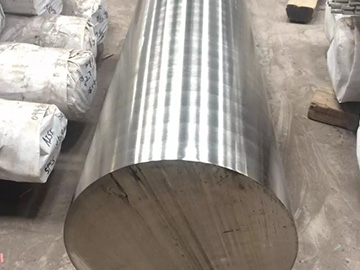
Stainless steel AISI 316 / BS 316S31 has good forgeability. The material should first be heated to a temperature of 1150°C to 1180°C so that forging can take place in the temperature range between 1180°C and 950°C. The material must then be quickly heated in water. The material must then be cooled quickly in water or air. Corrosion resistance is negatively affected by the formation of scale and tarnish colours, so these should be removed. The material is suitable for open-die forging and drop forging.
Solution heat treatment (cooling by air or water): 1020-1120 °C
Hot forming (cooling by air): 1200-900 °C
Stainless steel AISI 316 / 1.4401 has only medium machinability. As the material has a high carbon content, its machinability is comparatively poorer than that of 1.4404.
1.4401 vs 1.4408
1.4401 and 1.4408 are both austenitic stainless steels similar to AISI 316, but 1.4401 is a wrought material, while 1.4408 is a cast material. This difference in form affects their applications and machinability; 1.4401 is often used for pipes and plates, whereas 1.4408 is used for cast parts like pumps, valves, and cookware.